Introduction
Starting testosterone replacement therapy (TRT) involves several important decisions, and one of the first you’ll face is choosing how to take your testosterone. Initially, you may wonder whether to go with weekly injections or daily topical applications. In this regard, understanding the benefits and differences between Injectable and Topical Testosterone becomes essential before beginning treatment.
Both Injectable and Topical Testosterone can be highly effective; however, they work differently and cater to different lifestyles, preferences, and medical needs. Moreover, the choice you make can significantly impact your treatment experience — from convenience and cost to overall effectiveness and potential side effects. Therefore, it’s crucial to understand how each method functions before deciding which form of Injectable or Topical Testosterone is right for you.

The Two Main TRT Delivery Methods
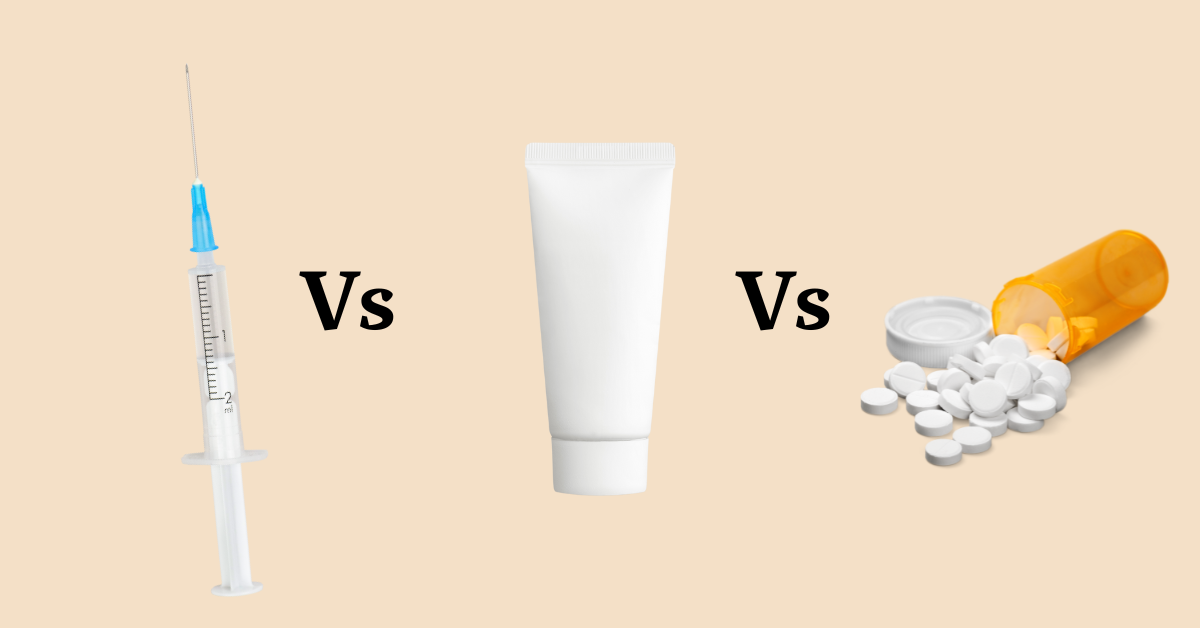
While testosterone therapy comes in several forms (pellets, nasal sprays, and oral options), the vast majority of men use either injectable or topical testosterone as their primary delivery method:
Injectable Testosterone:
Ultimately, this comprehensive guide breaks down everything you need to know about injectable and topical testosterone, helping you make an informed decision that aligns with your goals, lifestyle, and medical situation.
- Testosterone cypionate or enanthate
- Administered via intramuscular or subcutaneous injection
- Typically once or twice per week
Topical Testosterone:
- Gels, creams, or solutions applied to skin
- Daily application to various body areas
- Absorbed through the skin into the bloodstream
Each method has distinct advantages and limitations that make them more suitable for different patients and circumstances.

Injectable Testosterone
How It Works
Injectable testosterone uses long-acting esters (cypionate or enanthate) that slowly release testosterone into your bloodstream over several days. The medication is typically injected into the thigh muscle, gluteal muscle, or subcutaneously into fatty tissue.
Common Injectable Forms:
- Testosterone Cypionate: Most common in the US, 8-day half-life
- Testosterone Enanthate: Similar to cypionate, slightly shorter half-life
- Testosterone Propionate: Shorter-acting, requires more frequent injections
Administration Details
Injection Sites:
- Vastus lateralis (outer thigh) – most common for self-injection
- Ventrogluteal (hip area) – requires assistance or clinic visit
- Subcutaneous (fatty tissue) – smaller needles, easier injection
Typical Schedule:
- Once weekly: 100-200mg per injection
- Twice weekly: 50-100mg per injection (more stable levels)
- Some men prefer every 5 days for optimal stability
Advantages of Injectable TRT
Superior Absorption and Bioavailability:
Cost-Effectiveness:
Stable Hormone Levels:
No Transfer Risk:
Dosing Flexibility:
Disadvantages of Injectable TRT
Needle Requirements:
- Some men have needle phobia or anxiety
- Requires learning proper injection technique
- Need for proper needle disposal
Injection Site Issues:
- Possible soreness, bruising, or swelling
- Rare risk of infection if sterile technique not followed
- Scar tissue development with long-term use (usually minimal)
Hormone Level Fluctuations:
- Some men experience “peaks and valleys” between injections
- Energy or mood changes as hormone levels fluctuate
- May feel best 1-2 days after injection, worst before next dose
Administration Commitment:
- Must maintain consistent injection schedule
- Travel considerations for maintaining schedule
- Some men prefer clinic injections, requiring regular appointments

Topical Testosterone
How It Works
Topical testosterone is applied daily to clean, dry skin where it’s absorbed into the bloodstream. The absorption rate varies based on the application site, skin thickness, and individual factors.
Common Topical Forms:
- Gels: AndroGel, Testim, Fortesta (FDA-approved brands)
- Creams: Often compounded by specialty pharmacies
- Solutions: Axiron (applied to underarms)
- Patches: Less common due to skin irritation issues
Application Details
Common Application Sites:
- Shoulders and upper arms
- Abdomen
- Inner thighs
- Scrotum (for certain compounded creams)
Daily Routine:
- Apply at same time each day (usually morning)
- Allow to dry completely before dressing
- Avoid swimming or showering for several hours
- Wash hands thoroughly after application
Advantages of Topical TRT
No Needles Required:
Daily Hormone Delivery:
Easy Dose Adjustments:
Reversible Effects:
Disadvantages of Topical TRT
Transfer Risk:
- Can transfer testosterone to others through skin contact
- Dangerous for women and children
- Requires precautions for 2-6 hours after application
- May affect partners’ hormone levels or cause unwanted effects
Variable Absorption:
- Absorption rates vary significantly between individuals
- Skin conditions can affect absorption
- May not achieve adequate testosterone levels in some men
- Hot weather, sweating, or exercise can affect absorption
Daily Commitment:
- Must remember daily application
- Travel requires carrying medication
- Missed doses can affect symptoms
- Morning routine becomes more complex
Higher Cost:
- Brand-name gels are significantly more expensive
- Insurance coverage varies
- More frequent prescription refills needed
Potential Skin Issues:
- Irritation, redness, or rash at application sites
- Need to rotate application areas
- Some men develop sensitivity over time
Detailed Side-by-Side Comparison
|
Factor |
Injectable |
Topical |
|
Effectiveness |
High, predictable absorption |
Variable, depends on individual absorption |
|
Convenience |
1-2x per week |
Daily application required |
|
Cost |
Generally lower |
Generally higher |
|
Hormone Stability |
Can have peaks/valleys |
More steady daily levels |
|
Transfer Risk |
None |
Significant risk to others |
|
Dosing Precision |
Very precise |
Moderate precision |
|
Travel Friendliness |
Moderate (needles/vials) |
High (easy to pack) |
|
Insurance Coverage |
Usually better |
Often limited for brand names |
|
Side Effect Profile |
Lower estrogen conversion |
Higher estrogen conversion risk |
|
Learning Curve |
Injection technique required |
Simple application |
Special Considerations: Scrotal Creams
Some specialized compounding pharmacies create testosterone creams specifically for scrotal application. This method has unique characteristics:
Advantages:
- Higher absorption rate than other skin sites
- May increase DHT (dihydrotestosterone) levels more than other methods
- Often requires lower total doses
- Some men report better libido and energy
Considerations:
- Requires comfort with scrotal application
- Not widely available or studied
- May cause skin sensitivity in some men
- Requires experienced compounding pharmacy
Who Might Benefit:
- Men who don’t absorb regular topical testosterone well
- Those seeking higher DHT levels for libido benefits
- Men who want to minimize transfer risk while avoiding injections
Absorption and Metabolism Differences
Topical Testosterone Metabolism:
- Some undergoes first-pass liver metabolism
- Can result in higher estradiol conversion
- May require aromatase inhibitor more frequently
- Absorption varies with skin condition, temperature, and application technique
Injectable Testosterone Metabolism:
- Bypasses liver on first pass
- Metabolized gradually as it’s released from injection site
- More predictable conversion to DHT and estradiol
- Typically results in more stable hormone ratios
Making Your Decision
Key Factors to Consider

Choose Topical TRT If You

Choose Injectable TRT If You
Consider Your Lifestyle:

Work and Travel:

Family Situation:

Health Factors:

Monitoring and Adjustments
Regardless of your chosen method, proper monitoring is essential:
Lab Work Schedule:
- Baseline testing before starting treatment
- Follow-up labs at 6-8 weeks after starting or changing doses
- Ongoing monitoring every 3-6 months
Key Markers to Track:
- Total and free testosterone levels
- Estradiol (may be higher with topical methods)
- Hematocrit and hemoglobin
- PSA and liver function tests
- SHBG and other relevant markers
Timing of Lab Draws:
For Injectable TRT:
- Test at trough (just before next injection) for accurate baseline
- Some providers test at peak (1-2 days after injection) for optimization
For Topical TRT:
- Test 2-6 hours after application for peak levels
- Consistent timing relative to application is important
Switching Between Methods
Generally, many men try both methods before settling on their preference. Fortunately, switching is generally straightforward:
From Injectable to Topical:
- First, wait for injectable testosterone to clear (1-2 weeks)
- Then, start topical at standard dose
- Afterward, monitor symptoms and adjust as needed
- Finally, check labs at 6-8 weeks
From Topical to Injectable:
- In contrast, you start immediately after last topical dose
- Next, begin with conservative injectable dose
- As a result, you see faster symptom improvement
- However, monitor for side effects related to more rapid hormone changes
Trial Periods:
Additionally, some providers recommend trying each method for 2–3 months to determine personal preference and response.
Cost Considerations
When it comes to cost, understanding expenses helps you plan effectively for treatment.
Injectable Testosterone Costs
- Generic testosterone cypionate: $30-80 per month
- Needles and syringes: $10-20 per month
- Clinic injection fees: $25-50 per injection (if not self-injecting)
Topical Testosterone Costs:
- Brand-name gels: $300-600 per month without insurance
- Generic gels: $100-300 per month
- Compounded creams: $50-200 per month
Insurance Coverage
- Injectable testosterone typically has better insurance coverage
- However, many insurance plans don’t cover brand-name topical testosterone
- Moreover, prior authorization often required for topical methods
- Generic options may have better coverage

Safety Considerations
Injectable Safety:
- First, learn proper sterile injection technique
- Additionally, rotate injection sites to prevent tissue damage
- Always, ensure needle disposal in sharps containers
- Finally, watch for signs of infection at injection sites
Topical Safety:
- Likewise, strict handwashing after application
- Furthermore, avoid skin-to-skin contact for 2-6 hours after application
- Also, keep medication away from children and pets
- In addition, cover application site with clothing
- Lastly, consider showering before intimate contact
Working with Healthcare Providers
Red Flags:
- Providers who only offer one method without explanation
- Reluctance to monitor or adjust based on your response
- Dismissing your preferences without medical justification
- Not explaining transfer risks with topical methods
Questions to Ask Your Provider:
- Based on my health history, which method do you recommend?
- How will you monitor my progress with each method?
- What are the costs and insurance coverage for each option?
- Can I try both methods to see which works better?
- How do you handle dose adjustments for each method?
- What should I do if I experience side effects?
Ready to Choose Your TRT Method?
The decision between injectable and topical testosterone should be based on your individual circumstances, preferences, and medical needs. Both can be effective when properly prescribed and monitored.
Vitality Centers NW offers both injectable and topical TRT options with comprehensive support:
Personalized method selection based on your lifestyle and preferences
Proper training for self-injection techniques if you choose injectable
Comprehensive monitoring regardless of your chosen method
Flexible switching between methods based on your response
Cost-effective options including generic and compounded formulations
Comprehensive approach – Hormone optimization plus lifestyle guidance and support
Contact Vitality Centers NW
Start your TRT journey with expert guidance:
Phone: (509) 279-5738
Online: Schedule your free consultation at https://connect.vitalitycentersnw.com/free-consult
Remember, the best TRT method is the one you’ll consistently use and that effectively manages your symptoms while fitting your lifestyle.
Frequently Asked Questions
Q: Can I switch methods if the first one doesn’t work well?
Yes, switching between injectable and topical testosterone is common and generally straightforward. In fact, many men try both methods before finding their preference. Additionally, your provider can help you transition safely and adjust dosing appropriately.
Q: Which method gives faster results?
Typically, injectable testosterone often provides faster initial results due to more predictable absorption and higher bioavailability. However, individual responses vary, and some men respond well to topical methods from the start. Therefore, patience and monitoring are key when determining which option works best.
Q: Is one method safer than the other?
Overall, both methods are safe when properly used and monitored. Importantly, the main safety difference is transfer risk with topical methods. Ultimately, the safety profile depends more on proper dosing, monitoring, and individual health factors than the delivery method.
Q: Will insurance cover both methods?
Coverage generally varies significantly between plans. Usually, injectable testosterone has better coverage, especially for generic versions. Furthermore, many insurance plans require prior authorization for brand-name topical testosterone, although some generic gels may still be covered.
Q: How do I prevent testosterone transfer with topical methods?
To minimize risks, wash hands thoroughly after application, allow the medication to dry completely before dressing, cover the application site with clothing, and avoid skin-to-skin contact for 2–6 hours. Additionally, shower before intimate contact if possible to prevent accidental transfer.
Q: Can I use both methods together?
Generally, no. Using both methods simultaneously would likely result in excessive testosterone levels. However, some specialized protocols might use small amounts of topical testosterone to fine-tune injectable therapy, and therefore, this approach requires expert medical supervision.
Related Articles:
- TRT for Beginners: How Testosterone Therapy Actually Works
- TRT for Men Over 40: What to Expect in the First 90 Days
- Is TRT Safe Long-Term? What the Science Actually Says
Disclaimer: This information is for educational purposes only and should not replace professional medical advice. Always consult with a qualified healthcare provider before starting any hormone therapy treatment. Individual results may vary.